How to Identify Adulteration in Tea
Introduction: Tea as India’s Emotional Anchor
Tea in India is more than a beverage; it is a ritual that punctuates our mornings, afternoons, and evenings. From the clay cups of roadside stalls to the porcelain mugs in urban homes, chai is a symbol of warmth and belonging. In my recent blog on "Why Indians Love Tea and How It Became a Daily Ritual", I explored how tea connects generations and comforts us in moments of stress.
But this ritual was shaken when authorities in Telangana busted a massive tea adulteration racket in April 2026. Over 3,000 kilograms of expired tea leaves mixed with synthetic colours and jaggery were seized. Reading about this left me deeply alarmed. If something as sacred as our morning chai can be compromised, how do we protect ourselves?
The Dark Side of Adulteration: What’s happening behind the scenes
Adulteration in tea is not a new phenomenon, but the scale and sophistication of recent rackets are worrying. Unscrupulous traders exploit consumer trust by adding synthetic colours like Tartrazine or Sunset Yellow to make tea appear richer and more appealing. Expired leaves are recycled, dried again, and sold as fresh stock, robbing tea of its natural antioxidants. Fillers such as jaggery juice, starch, or even dust are mixed in to increase weight, while fake brands with glossy packaging mislead buyers into believing they are purchasing premium tea. This is not just cheating; it is dangerous. Synthetic dyes can cause allergies, digestive issues, and long‑term health complications. What should be a healthful beverage becomes a harmful concoction, undermining both tradition and trust.
Tea: A Family Tradition Under Threat
I remember my mother’s ritual of brewing tea every morning. She would carefully measure the leaves, boil them with the homemade chai masala she prepared, and pour the steaming liquid into the cups. For her, tea is not just a drink; it is a way to start the day with warmth and clarity.
Now imagine that same ritual compromised by adulterated tea. The aroma was replaced by chemical sharpness, the taste altered by artificial bitterness. It is not just the beverage that suffers; it is the tradition, the memory, the emotional anchor of millions of families. When adulteration creeps into something so sacred, it feels like a violation of trust, a disruption of cultural continuity.
How to Identify Adulterated Tea at Home
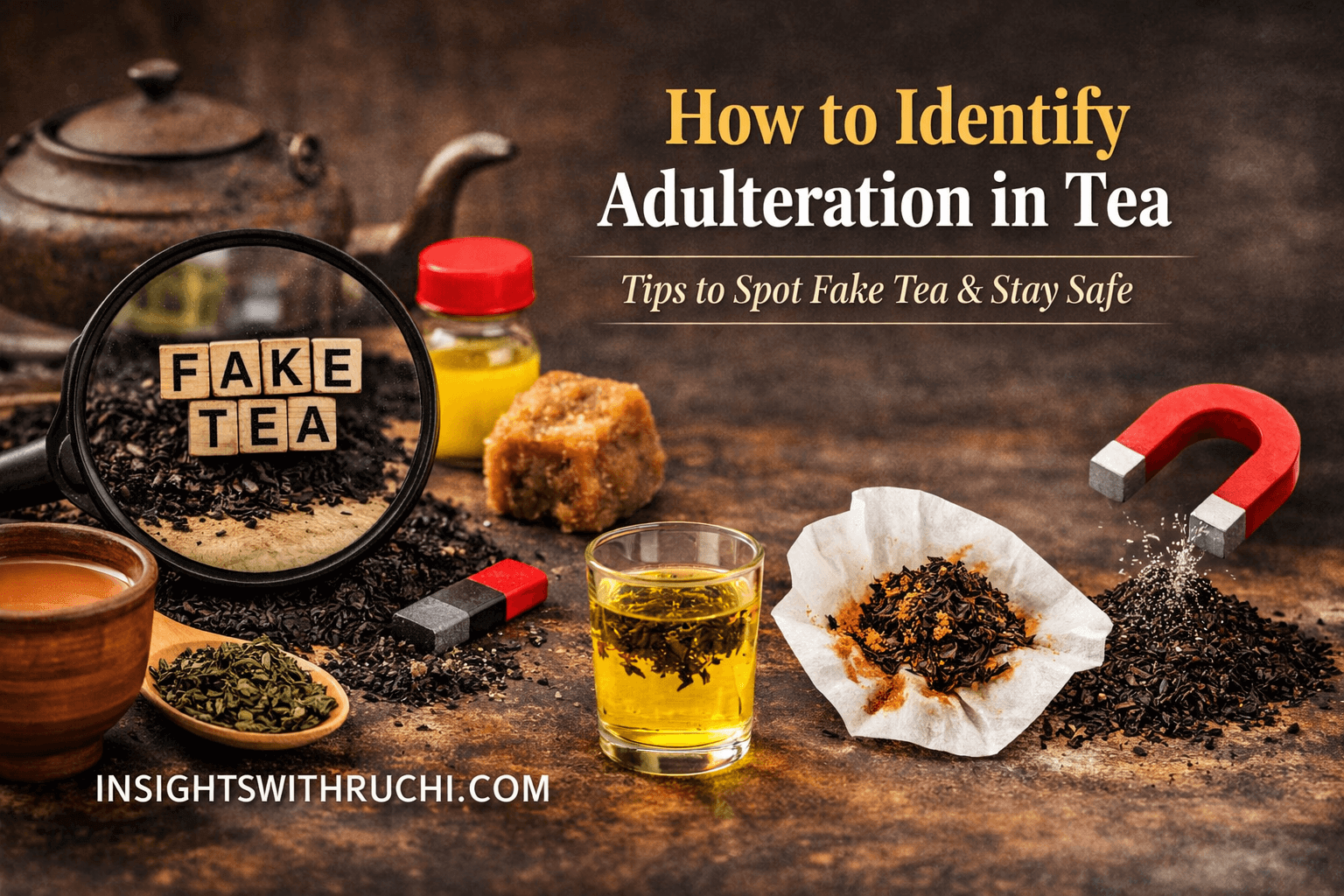
Fortunately, there are several simple yet effective tests that anyone can perform at home to safeguard their health and ensure their tea's purity. Each of these methods relies on everyday household items and keen observation, empowering consumers to take control of what they consume. Let’s explore them one by one:
1. Cold Water Test
Drop a small amount of tea leaves or tea powder into a glass of cold water. Genuine tea will not release colour immediately; it requires hot water to infuse naturally. If the water changes colour instantly, turning yellow, orange, or reddish, it is a clear sign that synthetic dyes have been added. This test is particularly useful because it highlights artificial colouring agents that are invisible to the naked eye. A natural tea infusion should take time, gradually releasing its aroma and hue, whereas adulterated tea behaves unnaturally fast.
2. Filter Paper Test
Take a piece of clean white filter paper or tissue and place a few wet tea leaves on it. Leave them for a few minutes and observe the paper. If coloured stains spread across the surface, it indicates the presence of artificial colouring. Pure tea leaves will not leave behind such marks; they may leave a faint natural tint, but never bright or patchy stains. This test is simple yet powerful, as it visually exposes adulteration that might otherwise go unnoticed. It is especially effective for detecting low‑quality tea powders sold in loose markets.
3. Infusion Test
Prepare tea the traditional way. Boil water, add tea leaves, and allow them to steep. Observe the colour, aroma, and taste of the brew. Genuine tea has a natural golden‑brown hue, a balanced fragrance, and a smooth taste. Adulterated tea often shows unnaturally bright colours, sometimes too red or too yellow, and the taste may feel bitter or metallic. The aroma may also seem sharp or chemical rather than earthy and soothing. This test relies on sensory experience, reminding us that our senses are powerful tools in detecting authenticity.
4. Magnet Test
Though rare, some adulterated tea powders may contain iron filings, either due to poor processing or deliberate malpractice to increase weight. To check, pass a small magnet over dry tea powder. If particles cling to the magnet, contamination is present. While this is not a common issue, it is worth testing when buying loose tea from unverified sources. Iron filings can pose serious health risks if consumed regularly, making this test a precautionary measure for those who prefer unbranded or bulk tea purchases.
5. Taste and Aroma Consistency Check
Beyond physical tests, consistency in taste and aroma across batches is a natural indicator of purity. Genuine tea from reputable brands maintains a steady flavour profile, while adulterated tea often varies, sometimes too strong, sometimes too weak. If your tea suddenly tastes different despite using the same brand, it may be a sign of adulteration. This test requires attentiveness and memory, but it is one of the most practical ways to safeguard your daily ritual.
6. Price Awareness Test
While not a physical test, being mindful of pricing is crucial. If tea is sold at unusually low rates compared to market standards, it often signals compromised quality. Adulterated tea is cheaper to produce, and racketeers exploit affordability to lure unsuspecting buyers. By questioning unusually low prices, consumers can avoid falling into traps. Remember, genuine tea is a product of careful cultivation and processing, and its value reflects that effort.
These simple yet effective methods, ranging from water and paper checks to sensory observation and price awareness, equip consumers with practical tools to detect adulteration. They require no special equipment, only awareness and vigilance. By adopting these practices, we can ensure that the tea we brew each day remains pure, aromatic, and trustworthy, preserving not just our health but also the cultural and emotional essence of India’s chai ritual.
Storing Tea to Preserve Aroma and Freshness
Just like buying good quality tea is important, storing tea in the right manner is equally essential to maintain its taste, aroma, and health benefits. Even the finest leaves can lose their charm if neglected after purchase. Here are some practical storage tips for you:
1. Use Airtight Containers
Tea leaves are highly sensitive to air and moisture. If left exposed, they quickly absorb humidity and surrounding odours, which dull their natural fragrance. Airtight containers, preferably made of tin, ceramic, or glass with tight lids, create a protective barrier. This ensures that the delicate oils and compounds in tea remain intact, preserving both flavour and aroma for longer periods.
2. Store in a Cool, Dark Place
Sunlight and heat are enemies of tea. Direct exposure to light can break down the natural antioxidants in tea leaves, while heat accelerates the loss of flavour. Always store tea in a cupboard or pantry away from stoves, ovens, or windows. A cool, dark environment slows down deterioration, allowing the tea to retain its freshness and nutritional value.
3. Buy Small Quantities
Tea is best enjoyed fresh. Buying in bulk may seem economical, but long storage periods often compromise quality. Instead, purchase smaller amounts that can be consumed within a few weeks. This way, you always brew tea that is lively and aromatic, rather than stale or flat. Think of it as choosing seasonal fruits, you want them at their peak, not past their prime.
4. Avoid Plastic Bags
Plastic packaging may seem convenient, but it often traps odours and can even leach chemicals into the tea. Over time, this alters the taste and reduces purity. Instead, opt for tin boxes, glass jars, or food‑grade ceramic containers. These materials are neutral, ensuring that the tea’s natural aroma remains untouched. Traditional households often used brass or clay jars, which also worked beautifully to preserve freshness.
5. Keep Away from Strong Smells
Tea leaves are like sponges; they absorb scents from their surroundings. If stored near spices, coffee, or even detergents, the tea can take on unwanted flavours. Always keep tea separate from strong‑smelling items. A dedicated shelf or box for tea ensures that its fragrance remains pure and untainted, so every cup tastes exactly as it should.
6. Respect Tea Like a Delicate Spice
Tea deserves the same care as saffron or cardamom. It is not just a beverage but a cultural ritual, a source of comfort, and a symbol of hospitality. Proper storage honours this tradition, ensuring that every brew carries the warmth and authenticity that tea is meant to deliver. Treating tea with respect is a way of preserving both its physical qualities and its emotional significance.
By following these simple yet mindful practices, you ensure that your tea remains fresh, aromatic, and true to its essence. Good storage is not just about preserving flavour, it is about safeguarding a ritual that connects families, traditions, and everyday moments of peace.
Conclusion: Safeguarding Our Chai
Tea is India’s emotional anchor, but adulteration threatens its purity. The Telangana racket is a wake‑up call: we must be vigilant, buy responsibly, and test our tea when in doubt. By adopting safe buying and storage practices, we can continue to enjoy chai as the comforting ritual it has always been without compromising our health. Protecting tea is not just about safeguarding a beverage; it is about preserving tradition, culture, and trust.
Read More Section
Why Indians Love Tea: A Daily Ritual (https://www.insightswithruchi.com/blog/why-indians-love-tea)
Ayurveda and Water: Healing Brews for Everyday Health (https://www.insightswithruchi.com/blog/drink-water-using-copper-vessels)
Kitchen Wisdom: How to Store Spices and Teas Properly (https://www.insightswithruchi.com/blog/10-easy-kitchen-cleaning-tips)
Comments
Loading comments...
You May Also Like
Japanese Kukicha Tea: Complete Guide to Twig Tea Benefits
“Discover authentic Kukicha tea with Japanese origin, Karigane labels, nutty flavor, and organic certification. Learn brewing tips for perfect taste.”
Read full article: Japanese Kukicha Tea: Complete Guide to Twig Tea Benefits
Why Indians Love Tea: A Cultural, Emotional, and Everyday Affair
Explore why tea holds such a special place in every Indian's heart — from chai stalls to family rituals.
Read full article: Why Indians Love Tea: A Cultural, Emotional, and Everyday Affair
Why You Should Avoid Drinking Black Tea on an Empty Stomach
Learn why starting your day with black tea on an empty stomach can do more harm than good.
Read full article: Why You Should Avoid Drinking Black Tea on an Empty Stomach