Few Surprising Olive Oil Hacks for Home, Beauty & Cleaning
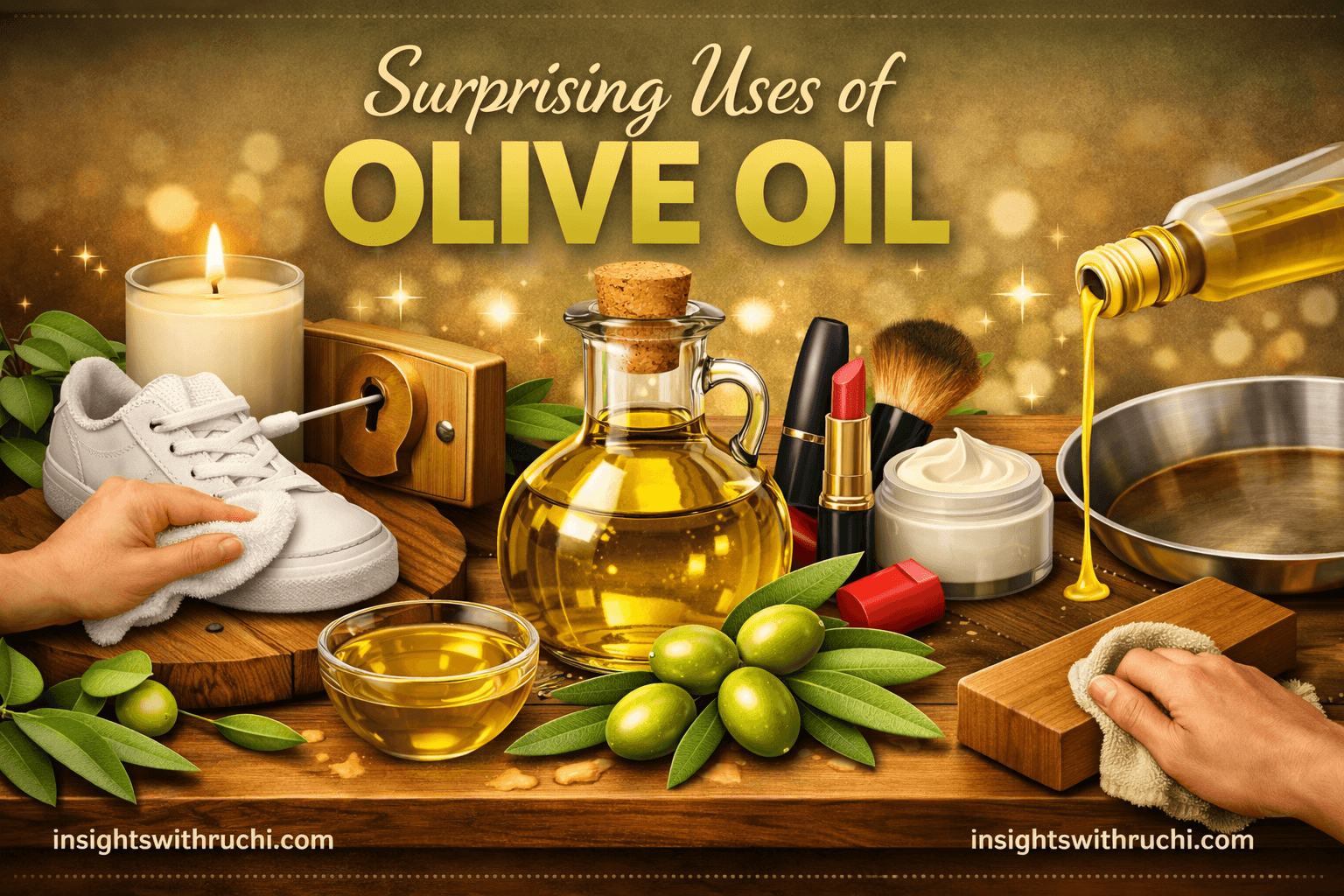
Few Surprising Olive Oil Hacks for Home, Beauty & Cleaning
Introduction: Olive Oil Beyond the Kitchen
Olive oil, often called “liquid gold”, is more than a culinary treasure. It is the pure juice of the olive fruit, extracted through careful harvesting and cold‑pressing. Unlike seed oils that require chemical refining, olive oil is obtained by mechanical processes- crushing, malaxation, and centrifugation, preserving its antioxidants, vitamins, and natural aroma.
The olive tree (Olea europaea) thrives in Mediterranean climates, with Spain, Italy, Greece, and Turkey leading global production. Its cultivation dates back thousands of years, with archaeological evidence showing olive oil use in Crete around 2500 BCE. Today, olive groves stretch across California, Chile, and even parts of Rajasthan and Himachal Pradesh in India, where farmers experiment with adapting Mediterranean techniques to Indian soil.
In Ayurveda, oils are seen as carriers of ojas (vital energy) and nourishment. While sesame and coconut oil dominate Indian tradition, olive oil is recognized for its "snigdha guna" (unctuous quality) and "sheetala" (cooling nature). Ayurvedic practitioners often recommend olive oil for skin hydration, Vata dosha balancing, and soothing dryness. Its richness in polyphenols aligns with Ayurveda’s emphasis on natural antioxidants to strengthen immunity.
The Vedas and ancient texts describe oils as sacred substances used in rituals, anointing, and purification. While references are primarily to sesame and ghee, olive oil Mediterranean counterpart, was similarly revered in Greek and Roman traditions. In fact, olive oil lamps lit temples, and athletes in ancient Greece massaged their bodies with olive oil before competitions, a practice mirrored in Ayurveda’s abhyanga (oil massage).
Olive oil’s role in beauty rituals is equally fascinating. Ancient queens and noblewomen used it as a moisturizer, hair conditioner, and even as a base for perfumes. Cleopatra is said to have blended olive oil with herbs for her famed beauty treatments. In Ayurveda, oiling the hair and skin is considered essential for longevity and radiance, and olive oil fits seamlessly into this philosophy.
Culinary traditions also embraced olive oil early on. The Romans drizzled it over bread, the Greeks mixed it with wine, and the Egyptians used it in ceremonial feasts. In India, though mustard and coconut oil were staples, olive oil has now joined the pantry as a healthier alternative, praised for its ability to lower cholesterol and support heart health.
My mother often reminded us: “Tel sirf khane ke liye nahi hota, ghar aur sehat dono sambhalta hai,"oil isn’t just for food, it nurtures both home and health. Olive oil, with its golden glow, has quietly become part of this legacy, blending Mediterranean heritage with Indian wisdom.
So, the question is “Which type of olive oil is best for a skin care routine and overall health?” Extra virgin olive oil (EVOO) is considered the purest and most beneficial type of olive oil for skin care because it is extracted from the first cold press of olives. This method ensures the oil remains unrefined and minimally processed, allowing it to retain its natural polyphenols, antioxidants, and fatty acids that nourish and protect the skin. In contrast, refined or “light” olive oils undergo chemical treatments that strip away many of these valuable compounds, making them less effective for skincare. EVOO is particularly rich in vitamin E, which shields the skin from free radical damage, and squalene, a compound that enhances hydration and elasticity. Its high polyphenol content also provides anti‑inflammatory benefits, helping to reduce redness and irritation.
For those seeking the best options, organic extra-virgin olive oil is the safest choice, as it is free from pesticides, while cold‑pressed oils maximize nutrient retention. Additionally, hypoallergenic blends such as Olivella Virgin Olive Oil are suitable for sensitive skin, offering gentle nourishment without irritation. Together, these qualities make extra virgin olive oil the most recommended type for maintaining healthy, radiant skin.
When using olive oil for skincare, there are a few important risks and considerations to keep in mind. Extra virgin olive oil (EVOO), while highly nourishing, can sometimes clog pores if applied too heavily on oily or acne‑prone skin, so it’s best to do a patch test before regular use. Although allergies to olive oil are rare, some individuals may experience irritation; therefore, testing on a small area of skin first is recommended. Another crucial factor is that low‑grade oils may not provide the same benefits and could even harm the skin. To ensure purity, always choose certified options such as USDA Organic or EU Organic labels, which guarantee authenticity and safety. By being mindful of these points, olive oil can be used effectively and safely as part of a skincare routine.
Let us now explore few surprising olive oil hacks that blend tradition, practicality, and modern living.
Olive Oil Home Remedies for Skin & Health
Healing Dry Skin Naturally: Olive oil is rich in antioxidants and fatty acids that penetrate deep into the skin, making it an excellent natural moisturizer. It softens rough patches, restores elasticity, and provides long‑lasting hydration without harmful chemicals. Many families still rely on this simple remedy for cracked heels and dry elbows.
Lip Care and Natural Scrub: A mix of olive oil and sugar creates a gentle exfoliating scrub that removes dead skin cells from the lips. The oil nourishes while the sugar polishes, leaving lips smooth, supple, and naturally glossy. It’s a quick DIY solution that works better than many store‑bought lip balms.
Traditional Earache Relief: Warm olive oil drops have long been used in households to ease ear discomfort. The oil’s soothing properties help reduce irritation and soften wax buildup. While this remedy is traditional, it’s always wise to consult a doctor before using it for medical issues.
Baby Massage Rituals: Olive oil has been a trusted choice for infant massages in many cultures. Its gentle texture is believed to strengthen bones, improve circulation, and calm restlessness. Mothers often prefer it over commercial baby oils because of its natural purity and nourishing qualities.
Winter nights in my childhood often ended with my mother applying olive oil to cracked heels. By morning, the skin felt soft and supple, a ritual that worked far better than creams from the market. It was a simple act of care that blended tradition with effectiveness.
Olive Oil for Healthier Cooking
Heart‑Friendly Choice: Olive oil is rich in monounsaturated fats that help lower bad cholesterol and support cardiovascular health. Adding it to daily meals makes food lighter yet nourishing, making it a smart choice for families managing lifestyle diseases.
Enhancing Flavors Naturally: A drizzle of extra virgin olive oil over salads, soups, or grilled vegetables enhances taste without overpowering the dish. It adds depth and aroma, serving as a healthier alternative to butter or heavy sauces.
Safe for Sautéing and Roasting: With a smoke point around 190–200°C, olive oil is ideal for sauteing onions, roasting vegetables, or pan‑searing fish. It retains nutrients while giving food a golden finish, making every day cooking both healthy and delicious.
Mediterranean Inspiration: Olive oil brings the essence of the Mediterranean diet into your kitchen, a diet praised worldwide for longevity and vitality. From pasta to stir‑fries, it adds authenticity and health benefits to modern recipes.
Balanced Cooking Rituals: In Indian homes, ghee is traditional, but olive oil blends heritage with modern health needs. It’s especially useful for those managing cholesterol or weight, offering a lighter alternative without compromising taste.
I remember my first attempt at roasting bhindi (okra) with olive oil instead of mustard oil. The taste was surprisingly light, and my family noticed how crisp yet non‑greasy it felt. My aunt chuckled, saying, “Tel badal gaya, par swaad aur sehat dono ban gaye” -the oil changed, but both taste and health improved.
Olive Oil Hacks You Didn’t Know
Makeup Remover Without Chemicals: Olive oil gently dissolves stubborn mascara and eyeliner without irritating the skin. It leaves the face clean, soft, and moisturized, making it a natural alternative to chemical removers.
Natural Shaving Substitute: A thin layer of olive oil works as a shaving cream, allowing the razor to glide smoothly. It reduces cuts and irritation while leaving the skin nourished and silky.
Furniture Polish for Wooden Shine: Mixing olive oil with lemon juice restores the glow of wooden furniture. It is a quick, eco‑friendly polish that revives dull surfaces and adds a protective layer.
Fixing Squeaky Hinges: A drop of olive oil applied to squeaky door hinges instantly silences the noise. It is a simple household hack that saves you from buying chemical lubricants.
Removing Sticker Residue: Olive oil loosens sticky glue from jars or bottles, making it easy to wipe away. It is especially handy during festive cleaning when stubborn residues refuse to budge.
During Diwali cleaning, we once ran out of polish for our wooden trays. A quick mix of olive oil and lemon juice brought back its glow. My mother smiled, saying, “Modern problems, traditional solutions.”
Olive Oil for Cleaning Everyday Items
Stainless Steel Shine: Olive oil buffs kitchen appliances to a streak‑free finish. It not only cleans but also adds a protective layer, keeping steel surfaces looking new.
Leather Conditioner: A light rub of olive oil revives old handbags or shoes, restoring their softness and shine. It is a natural conditioner that prevents cracking and extends the life of leather goods.
Garden Tool Protector: Applying olive oil to garden tools after use prevents rust and keeps them in good condition. It is a simple way to maintain durability without expensive sprays.
Dust Control on Surfaces: A thin coat of olive oil reduces static, preventing dust from settling quickly. This hack is especially useful in Indian kitchens where steel utensils dominate, helping keep surfaces cleaner for longer.
FAQ:
Q1. What is extra virgin olive oil, and how is it different from regular olive oil?
Extra virgin olive oil (EVOO) is made by cold‑pressing fresh olives, which retains its flavor, aroma, and antioxidants intact. Regular olive oil is usually refined and blended, which makes it lighter in taste but less rich in nutrients. EVOO is the one you’ll want for both health and authentic flavor.
Q2. Is olive oil good for your health?
Yes, olive oil is considered one of the healthiest fats. It is packed with monounsaturated fatty acids and polyphenols that support heart health, reduce inflammation, and even aid digestion. That’s why it is a cornerstone of the Mediterranean diet.
Q3. Can you cook or fry with extra virgin olive oil?
Absolutely. EVOO has a smoke point around 190–200°C, which is fine for sauteing, roasting, baking, and even shallow frying. It not only withstands everyday cooking but also adds a subtle richness to dishes.
Q4. How should olive oil be stored to keep it fresh?
Keep olive oil in a cool, dark place away from direct sunlight and heat. Use dark glass bottles if possible, and always seal tightly. Once opened, try to finish it within 3–4 months for the best taste and nutrition.
Q5. What are the main health benefits of olive oil?
Olive oil helps lower LDL cholesterol, supports brain function, regulates blood sugar, and has anti‑inflammatory properties. Its compounds, like oleocanthal, act almost like natural pain relievers, making it more than just a cooking ingredient.
Q6. How can you tell if olive oil has gone bad?
Spoiled olive oil smells rancid, tastes sour or metallic, and may look cloudy or darker than usual. If it doesn’t smell fresh and fruity, it’s best not to use it. Always check the bottling date before buying.
Q7. Can olive oil be used for cleaning wood furniture?
Yes, mix olive oil with lemon juice for a natural polish.
Q8. Is olive oil safe for baby massage?
Yes, many families use it, but consult your paediatrician if the baby has sensitive skin.
Q9. Does olive oil help with cracked heels?
Yes, applying before bedtime softens skin overnight.
Conclusion
Olive oil is more than a kitchen staple; it’s a bridge between tradition and modern living. From home remedies to cleaning hacks, it embodies the philosophy of simple solutions for everyday life. By integrating these olive oil hacks into your routine, you save money, embrace natural living, and carry forward the wisdom of generations.
Read More Section
Tulasi Benefits in Everyday Life (https://www.insightswithruchi.com/blog/10-ways-to-protect-tulasi-plant-this-summer-season)
Vaseline Hacks for Skin & Home (https://www.insightswithruchi.com/blog/home-uses-of-vaseline)
Tea Rituals and Adulteration Awareness (https://www.insightswithruchi.com/blog/how-to-identify-adulteration-in-tea)
Comments
Loading comments...
You May Also Like

Choti Harad: Ayurveda’s Golden Remedy for Everyday Wellness
Discover the powerful benefits of Choti Harad in Ayurveda. Boost digestion, immunity, and wellness naturally. Read more for holistic health insights today!
Read full article: Choti Harad: Ayurveda’s Golden Remedy for Everyday Wellness
Five Tips for a Healthy Routine: Simple Habits for a Balanced Life
Discover five practical healthy routine tips for daily wellness. Improve lifestyle, balance habits, and boost energy with simple hacks.
Read full article: Five Tips for a Healthy Routine: Simple Habits for a Balanced Life
Why You Should Soak Mangoes for 30 Minutes Before Eating
Mango season is here! From Alphonso to Langra, India celebrates its king of fruits with love and tradition. But did you know soaking mangoes before eating has scientific benefits? Explore varieties, health perks, and cultural anecdotes in this detailed blog that blends Ayurveda, modern nutrition, and family traditions.
Read full article: Why You Should Soak Mangoes for 30 Minutes Before Eating